How to Choose the Right PCB Board for Your Project?
Choosing the right Pcb Board for your project can be challenging. The complexity of electronic design often leaves many unsure about their choices. A PCB, or printed circuit board, is essential for creating durable and functional electronics. Understanding the different types helps ensure optimal performance.
When selecting a PCB board, consider factors like material, thickness, and layer count. Each decision impacts the final product's reliability. For instance, using a high-frequency material can improve signal integrity. However, these options may come with higher costs.
Reflecting on your needs is crucial. Assessing factors such as budget and project requirements can clarify the selection process. Misjudging these details can lead to costly mistakes. Take your time to research and consult experts if needed. Employing a methodical approach will enhance your project’s overall success.
Understanding PCB Types: Rigid, Flexible, and Rigid-Flex Options
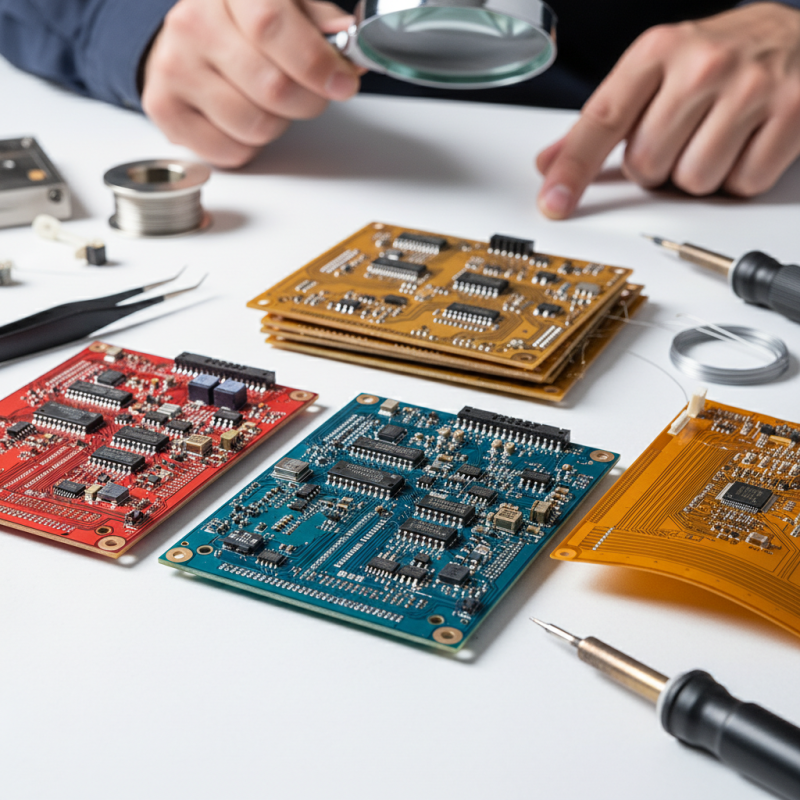
When selecting a printed circuit board (PCB) for your project, understanding the different types is crucial. Rigid PCBs are the most common variant. They are stable and support complex components. According to industry reports, rigid PCB market growth is projected at 4.5% annually through 2026. These boards excel in static applications, where durability is essential. However, rigidity limits their flexibility in design and application.
Flexible PCBs present a distinct advantage in terms of adaptability. They can bend and fit into compact spaces, which is ideal for modern electronics. A survey from IPC reveals that about 25% of new designs utilize flexible options due to their lightweight and compact nature. Yet, they can be challenging to manufacture. This complexity can lead to higher costs and longer lead times.
Rigid-flex PCBs combine the benefits of both types. They offer flexibility while maintaining a sturdy structure. This hybrid solution is increasingly favored in medical devices and aerospace applications, where space and reliability are critical. Yet, the design process may take longer to optimize materials for both rigidity and flexibility, making seamless integration a challenge. These trade-offs require careful consideration to ensure optimal performance for your specific application.
Key Specifications to Consider When Selecting a PCB Board
When selecting a PCB board for your project, several key specifications must be considered. Material type is crucial. Common materials include FR-4, polyimide, and PTFE, each with unique characteristics. For example, FR-4 is popular due to its balance of cost and performance. However, it might not withstand extreme temperatures as effectively as polyimide, which excels in high-temperature environments.
Additionally, board thickness impacts durability and performance. Standard thickness ranges from 0.032 to 0.062 inches. Thicker boards can provide better mechanical strength but may restrict design flexibility. The International Electrotechnical Commission (IEC) suggests adhering to industry standards on thickness for reliability.
Tips: Evaluate your project's specific requirements. Understand the environmental conditions where the PCB will operate. Don’t overlook copper weight either. It influences current capacity and thermal dissipation.
Another critical factor is layer count. Simple applications often use single or double-layer boards. However, complex designs may require multi-layer options. Industry reports indicate that multi-layer PCBs are expected to grow by 8% annually due to rising electronics demand. A thoughtful selection process involves analyzing these dimensions in detail. Each choice will directly affect performance and longevity.
Material Choices for PCBs: FR-4, High-Frequency, and More
When selecting a PCB board, the choice of material is crucial. FR-4 is the most common material used for standard applications. It is a reinforced epoxy glass fabric. This makes it strong and reliable. However, it might not suffice for high-frequency applications. FR-4 has limitations in performance at elevated frequencies. This can lead to signal integrity issues.
For high-frequency applications, alternative materials are often required. One option is PTFE (Teflon) based substrates. They offer low dielectric losses and excellent thermal stability. These characteristics are essential for maintaining signal quality in microwave and RF applications. However, PTFE boards can be more expensive than standard FR-4. This could impact budget constraints in your project.
Another material option is polyimide. It withstands extreme temperatures and is flexible. This can be beneficial in applications where boards need to endure harsh environments. Choosing the right material often depends on specific project needs. Not every material will be ideal for every situation. Reflection on your application's unique demands is necessary for making the best choice.
Evaluating PCB Design Complexity and Its Impact on Performance
When selecting a printed circuit board (PCB) for your project, design complexity is a crucial factor. More complex designs often require more layers, which can increase manufacturing costs. Each layer adds potential for errors, demanding precision. Designers must balance performance needs with cost-efficiency. A poorly executed complex design can lead to malfunctions.
It's not just about the number of layers. The arrangement of components plays a vital role. A compact layout may enhance performance but can complicate heat dissipation. Inefficient designs can heat up, reducing reliability. Emphasizing clear routing and grounding techniques can mitigate these issues. Yet, achieving perfection is tricky. Designers must revisit their plans repeatedly.
Overall, the relationship between design complexity and performance is intricate. Complex designs offer capabilities, but they challenge reliability. Regular review and testing help identify potential pitfalls. Streamlining designs is beneficial, but oversimplifying can hamper functionality. Balancing complexity and performance is key to successful PCB design.
Cost vs. Quality: Balancing Your Budget for PCB Projects
When it comes to PCB projects, balancing cost and quality is crucial. A low-cost PCB may seem appealing, but it could lead to issues down the line. Cheap materials often produce unreliable boards that fail to meet specifications. This can result in increased costs due to rework or replacements.
Investing in higher-quality PCBs can significantly enhance project reliability. However, this does not mean you should overspend. Carefully evaluate your project's needs. For example, complex designs may require more expensive materials. In contrast, simpler projects might not need the highest quality. Understanding your specific requirements is essential for making cost-effective decisions.
It's also vital to consider long-term implications. A lower upfront cost might save money initially, but poor performance can lead to greater expenses later. Many engineers overlook this balance. Reflecting on past projects can help in using lessons learned. Quality should align with project goals without inflating the budget unnecessarily.
How to Choose the Right PCB Board for Your Project? - Cost vs. Quality: Balancing Your Budget for PCB Projects
| PCB Type | Material | Layer Count | Cost per Square Foot | Lead Time (Days) |
| Single-Sided | FR-4 | 1 | $10 | 5 |
| Double-Sided | FR-4 | 2 | $25 | 7 |
| Multi-Layer | FR-4 | 4 | $40 | 10 |
| Rigid-Flex | Polyimide | 4 | $80 | 15 |
| High-Frequency | PTFE | 2 | $100 | 20 |